
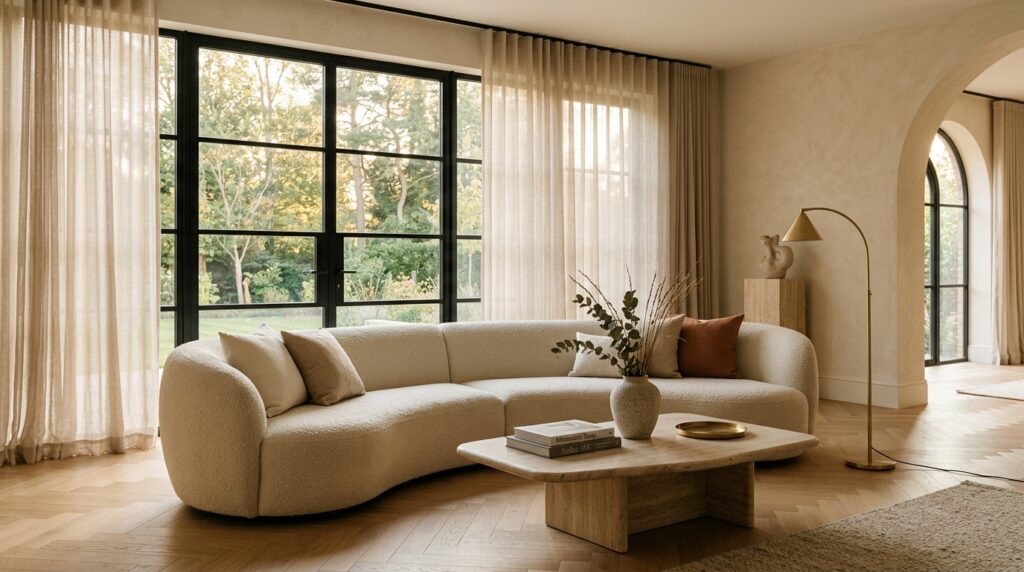
For over a decade, interior design was dominated by sterile white galleries – pristine, clinically curated, and distinctly detached from the warmth of human life. Today, a quieter revolution has arrived: Warm Minimalism. It is the conscious art of pairing deliberate restraint with soul, organic materiality, and restorative comfort.
In an increasingly frantic digital age, our homes must serve as sanctuaries of decompression. True luxury in contemporary interior architecture is no longer measured by ornament or ostentation, but by the quality of light, the honesty of materials, and the presence of breathing room.
1. Beyond the White Box: The Palette of Earth & Texture
Where classic minimalism relied on flat latex paints and cool hospital grays, warm minimalism draws its power from natural earth tones: warm biscuit, chalky oatmeal, stone limestone, and weathered taupe.
To keep monochromatic spaces from feeling one-dimensional, architects and designers rely on tactile contrast rather than busy pattern. When color contrast is subtle, textural contrast must be amplified.
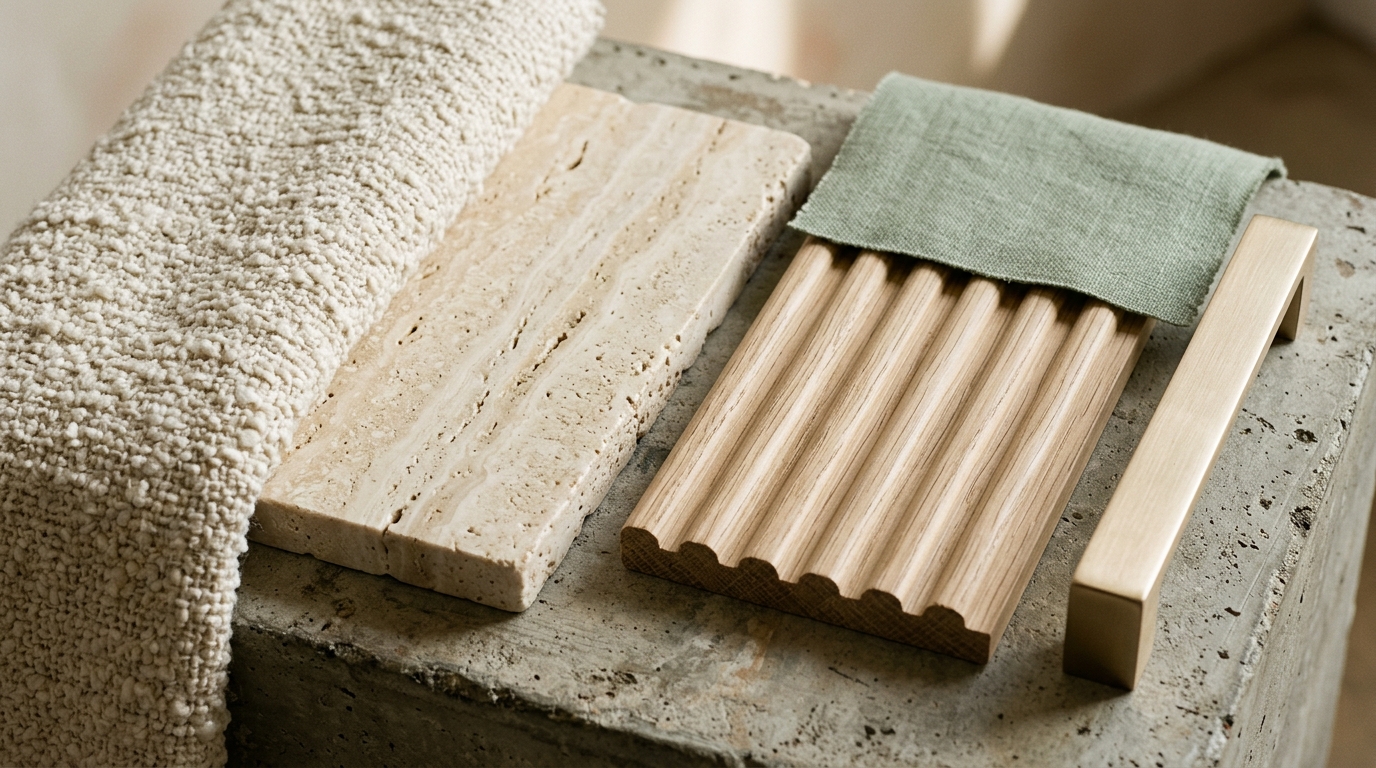
Essential Textures to Layer:
- Limewash & Roman Clay Plaster: Creates nuanced, cloud-like depth on walls that dances as natural sunlight shifts throughout the day.
- Honed Roman Travertine & Limestone: Matte, velvety stone surfaces with visible porous geological history instead of reflective polished granite.
- Fluted & Rift-Sawn Oak: Slatted vertical acoustic wall paneling introduces rhythm, acoustic dampening, and biological warmth.
- Textured Boucle & Heavy Slub Linen: Tactile upholstery fabrics that invite touch and soften modern linear architecture.
2. The Japandi Dialogue: Scandinavian Comfort Meets Wabi-Sabi Grace
One of the most profound currents in modern interior design is Japandi – the seamless synthesis of Scandinavian hygge (coziness and well-being) with Japanese wabi-sabi (finding beauty in impermanence and imperfection).
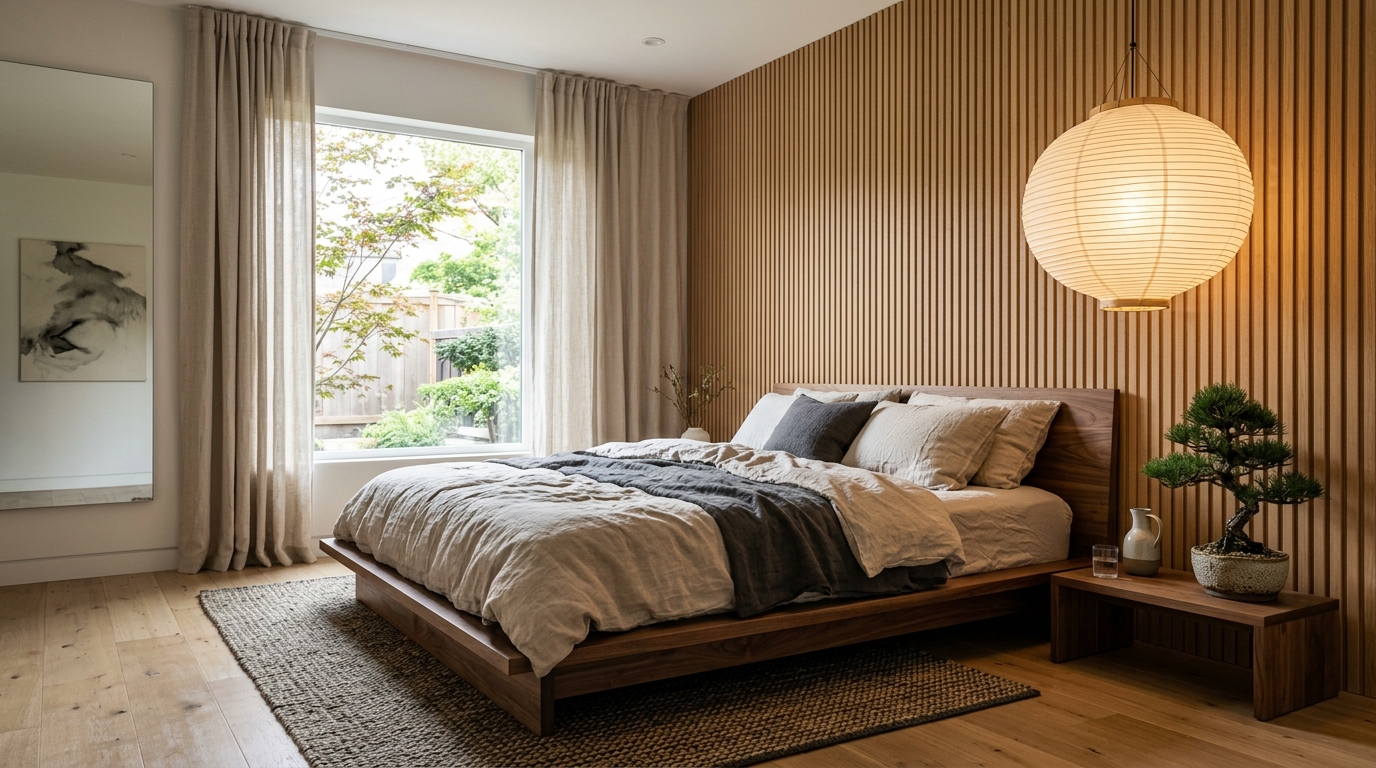
Japandi brings intentionality to furniture scale. By keeping primary furniture pieces closer to the floor – such as low-platform beds, organic low-profile sofas, and minimalist benching – the eye perceives vertical ceilings as dramatically higher. The space immediately feels airier and grounded.
“Simplicity is not about having less. It is about making room for what truly matters.”
3. Biophilic Architecture: Inviting Nature to Live Indoors
Biophilic design is not simply adding a potted succulent to a shelf; it is an architectural commitment to human evolutionary biology. Natural light, sightlines to foliage, indoor water elements, and living vertical plant installations have been empirically shown to lower cortisol, stabilize circadian rhythms, and enhance focus.
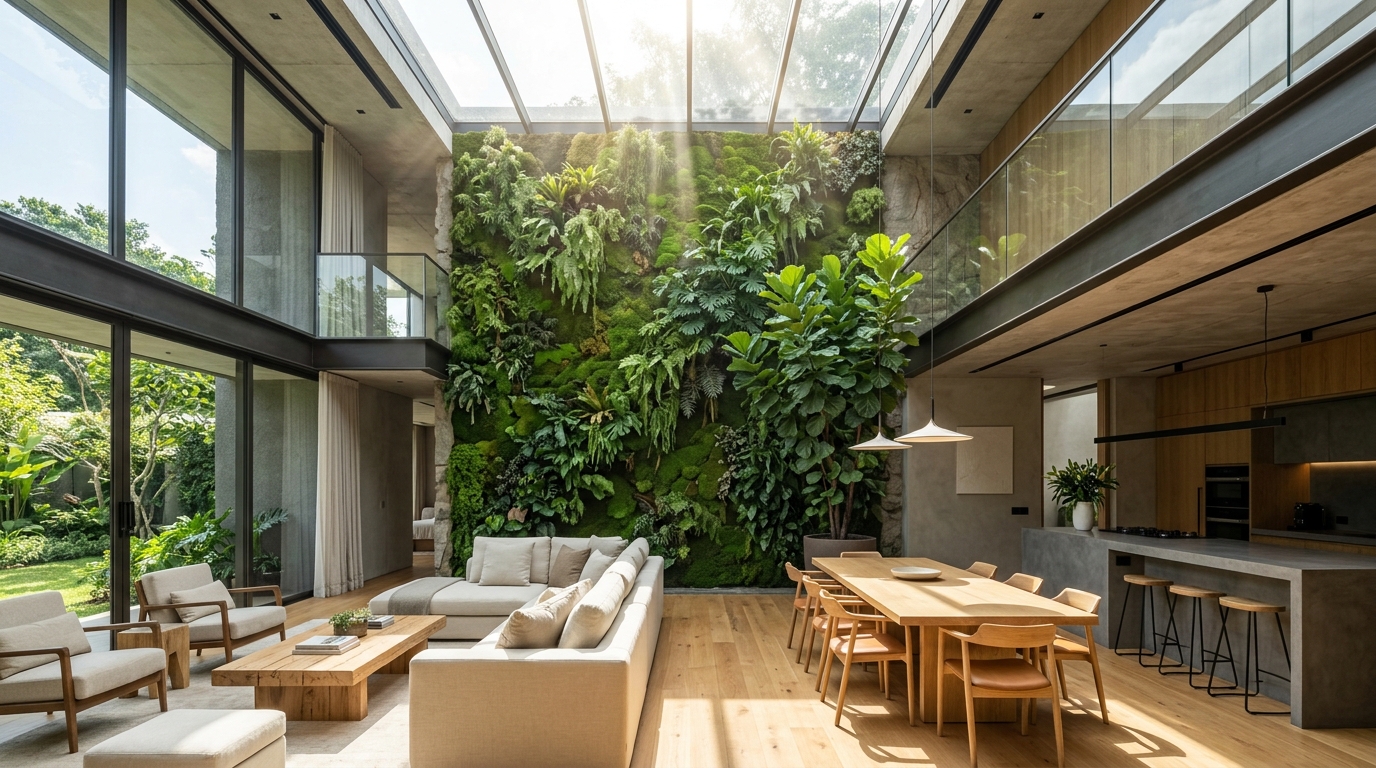
When designing with biophilic elements, focus on:
- Circadian Lighting Design: Use warm light (2700K to 3000K) with indirect coves and architectural floor washers to evoke morning sun and fireside evenings, avoiding harsh clinical downlights.
- Living Focal Sculptures: Specimen trees like Japanese Maple, Fiddle-Leaf Fig, or Olive Trees in raw clay planters anchor high-ceiling spaces with living energy.
- Air Quality and Natural Fibers: Choosing certified non-VOC coatings, unsealed European oak floors, and pure unbleached linen drapery creates an environment that literally smells like fresh nature.
4. The 5 Immutable Rules of Spatial Harmony
Whether you are undertaking a complete home build or refreshing a living room, keep these timeless designer guidelines close at hand:
Honor Negative Space
Resist the urge to fill every corner. Empty space is not wasted space; it is the frame that gives your chosen furniture dignity.
The 2700K Lighting Rule
Ban cool overhead bulbs from living spaces. Always select 2700K warm-white LED fixtures with high Color Rendering Index (CRI > 90).
Embrace Imperfect Patina
Allow unlacquered brass to tarnish, travertine to wear naturally, and full-grain leather to develop age marks. Perfection feels manufactured; patina feels like home.
Curved Silhouettes
Break up the rigid boxes of standard architecture with organic, arched doorways, kidney-shaped sofas, and circular coffee tables.
Closing Thoughts: A Living Sanctuary
Interior design is ultimately not about impressing guests – it is about how a home cradles your daily rituals. When you brew morning coffee, when you unwind after a demanding journey, or when you share conversation across a candlelit table, an environment shaped by warm minimalism whispers tranquility.
Start small: remove two objects that bring you no genuine delight, introduce a textural linen throw, switch a harsh lamp to an amber glow, and give your home room to breathe.
What is your personal interior design aesthetic?
Do you gravitate towards organic Japandi, warm minimalism, or textured biophilic spaces? Leave your thoughts and questions in the comments below!